
The VineVitis vinifera
New plantings receive rare attention: the choice of scions and rootstocks is made with care, blending several grape varieties and selections within the plots themselves. This plant diversity strengthens the resilience of the vines, enriches soil complexity, and nurtures the singularity of the future wine.
Across all plots, physiological pruning guides our approach. It is not merely a technique, but an attentive listening to the plant as a living being in its own right, endowed with its own physiology and innate characteristics, such as acrotony, the tendency of sap flow to favor the extremities.
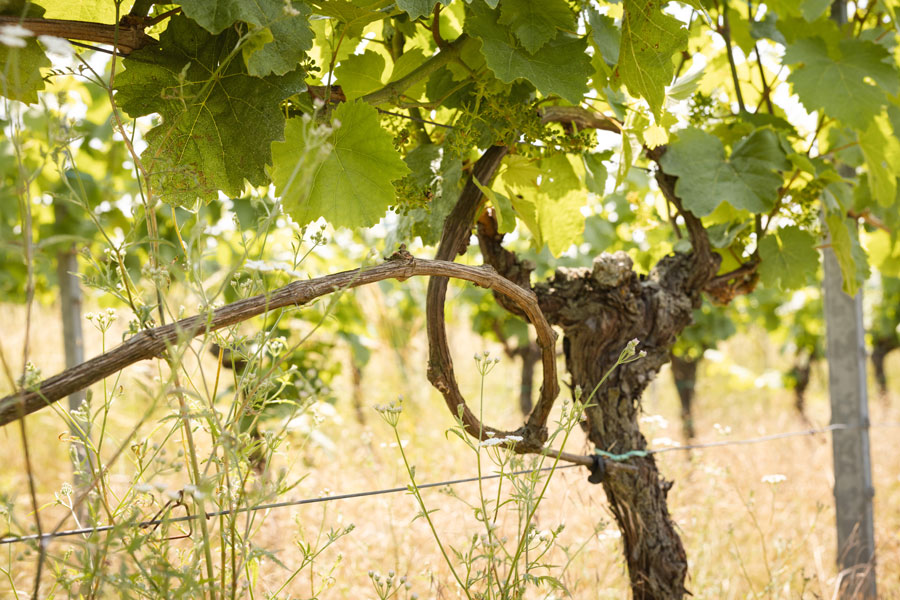
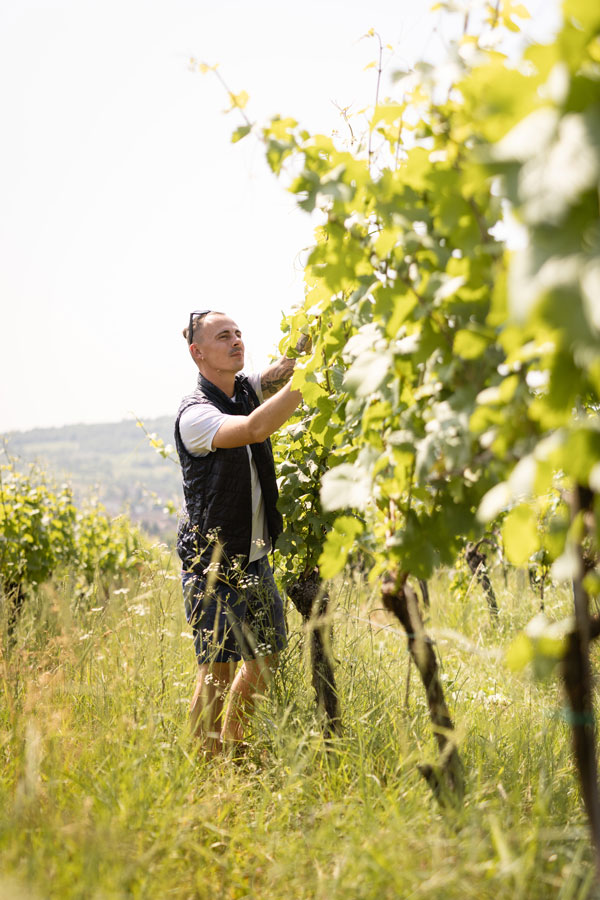
Respecting this dynamic allows the vine to express itself in its natural balance, without constraint or unnecessary injury. There is no universal model: no two pruning operations are identical from one plot to another, or even from one vine to its neighbor. Each intervention is conceived “in situ,” according to the strengths and needs of the location: the microclimate, pedology, water reserves, soil vitality, and plant health.
At the Domaine, each plot is considered a living organism, where each organ dictates its rhythm and needs.
A LivingSoil
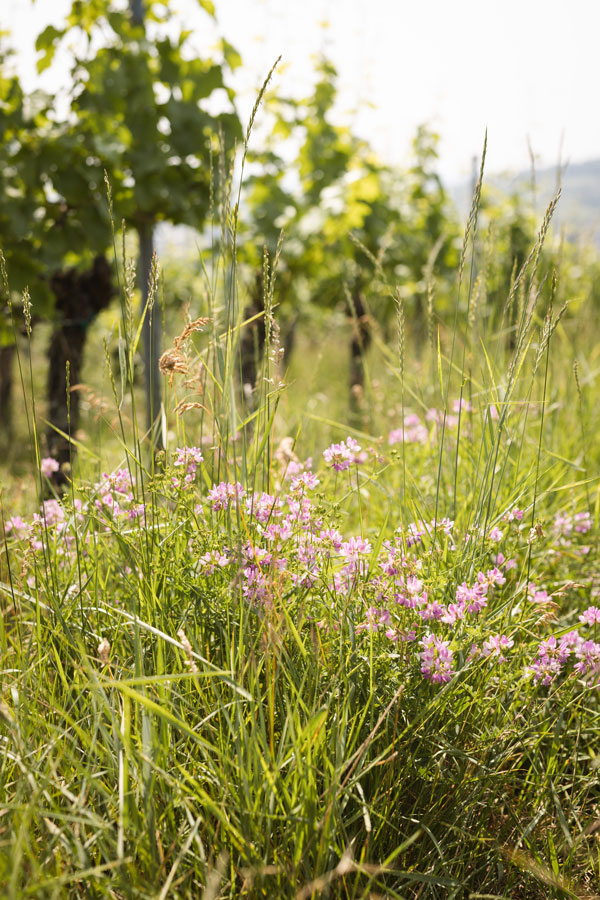
Herbal teas, fermented extracts, and compost teas support soil vitality and strengthen the natural resistance of the vines. Following the same logic, treatment doses are reduced through the use of goat whey as an antifungal and pH regulator.
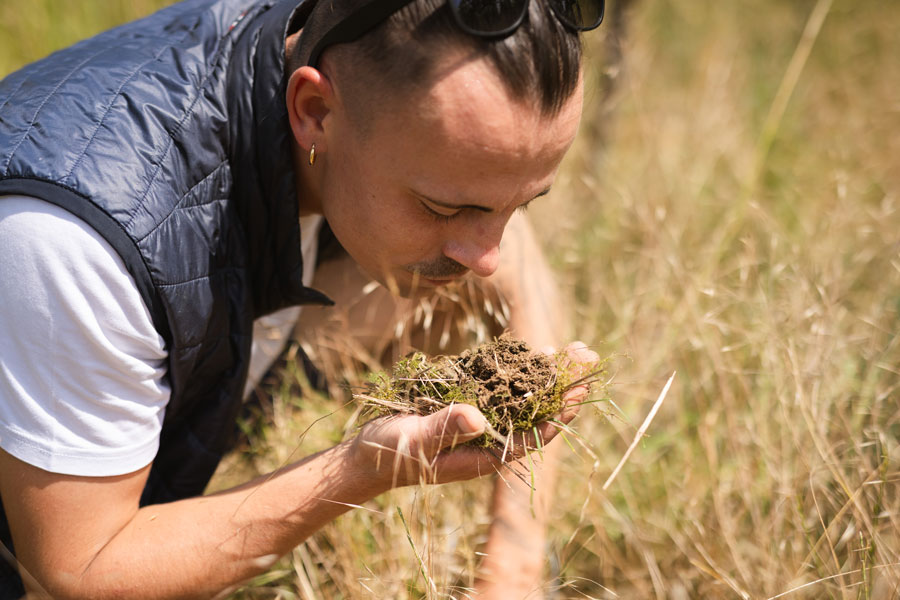
Vineyard work is part of an approach that respects natural balances, nourished by the principles of biodynamics. Dynamized preparations are used to stimulate soil life and strengthen plant vitality, without seeking certification: a free and empirical approach, guided primarily by the observation of living organisms. Everything contributes to a single objective: to place soil life at the center of the equation. For it is there, in this fragile balance between matter, life, and time, that the true expression of what we call Terroir perhaps lies.
Thus, with the changing seasons, the vineyard becomes a harmonious ensemble of ecosystems, where man is no longer the orchestrator, but the attentive guardian of a fragile balance.
A Mosaicof Terroirs
Domaine EINHART spans a mosaic of about sixty plots located at the foot of the Vosges mountains, between Rosenwiller, Rosheim, and Dorlisheim. Situated between 160 and 300 meters above sea level, the vines benefit from multiple exposures and a privileged environment, where each hillside reveals a unique expression of the terroir.
Sheltered from oceanic influences by the Vosges massif, the vineyard thrives under a distinct continental climate, characterized by hot, dry summers, harsh winters, and moderate rainfall. This context favors a later vegetative cycle, leading to slow maturation, which ensures freshness and depth in the wines.
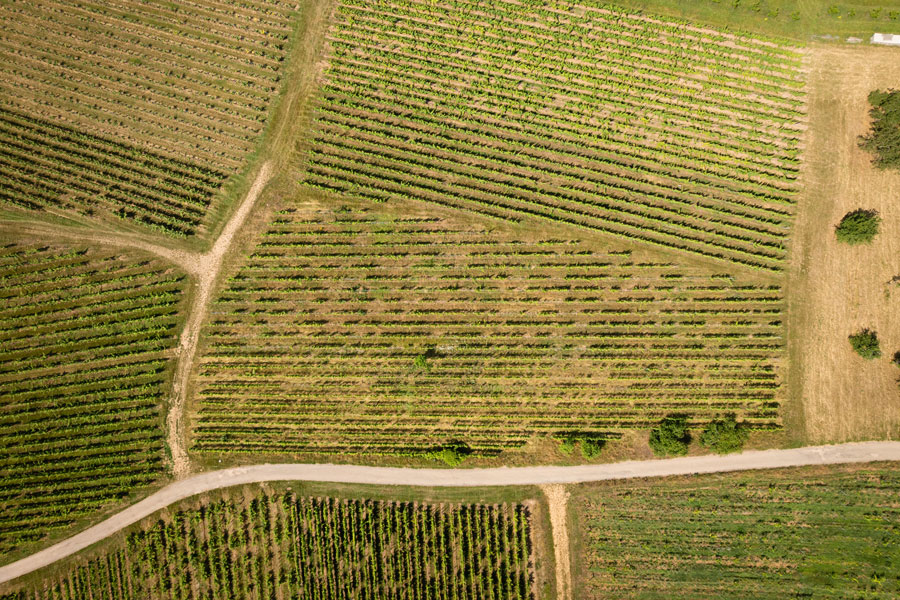
The substrate alternates between limestone formations and occasionally some pink sandstone, sometimes intermingled within the same slope. This geological diversity is coupled with great pedological variability: clays, silts, and sands combine or not in varying proportions, influencing the water reserve and the innate fertility of the site.
From this interaction between substrate, climate, and human expertise, wines of strong identity are born: at once fresh, deep, and textured, they precisely convey the minerality and energy characteristic of the hillsides of Rosenwiller and its surroundings, a rare balance between strength, finesse, and vitality.